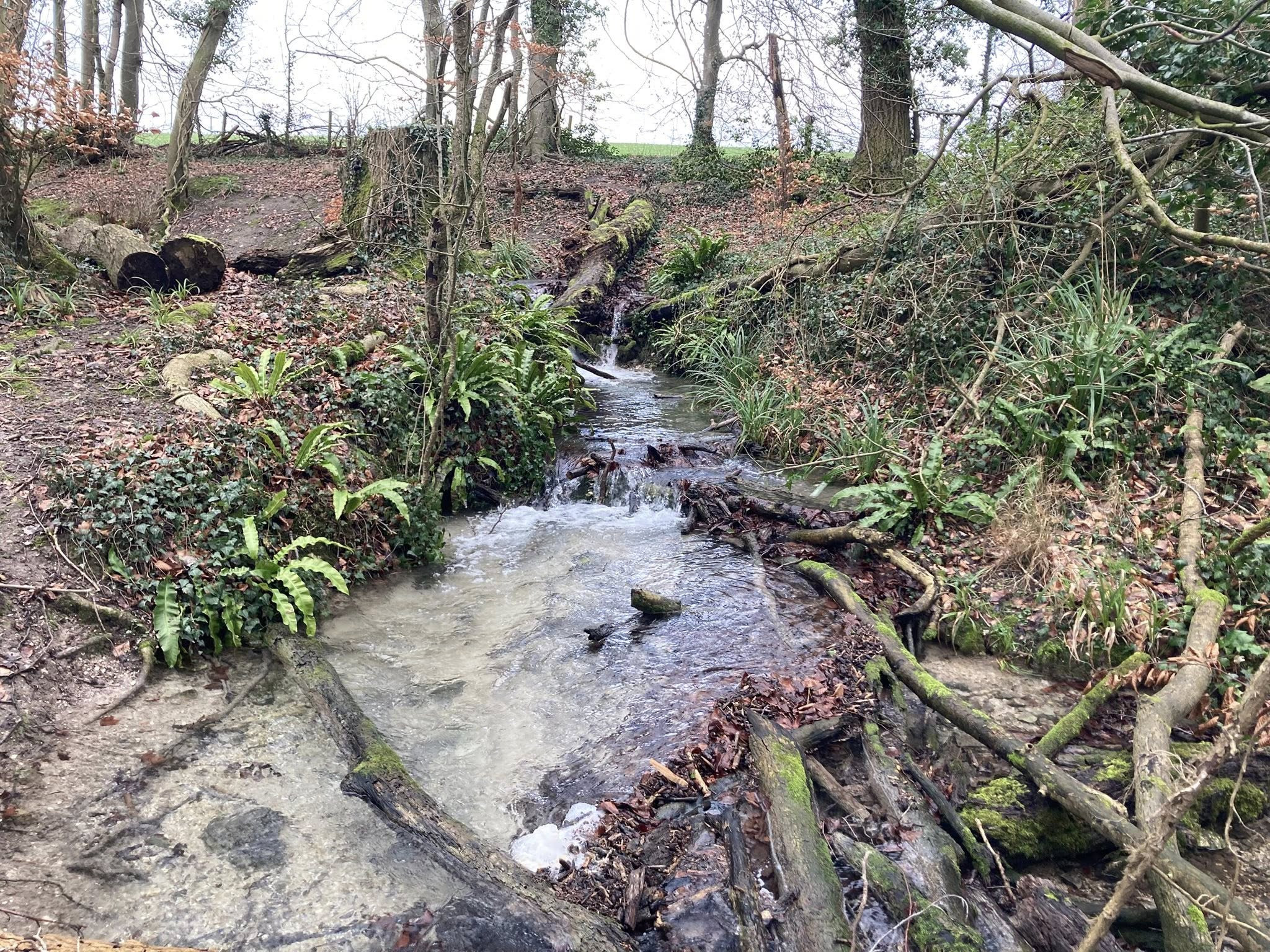
Beneath the South Downs, hidden water connects our landscape. The Sussex Chalk Network is investigating how groundwater connects to our springs and chalk streams, what threatens its quality, and how we can protect the wildlife and communities that depend on it.
Led by Ouse & Adur Rivers Trust and supported by Southern Water and Friends of the South Downs, the Network brings together groundwater investigations, habitat surveys and community monitoring to guide the future protection and restoration of Sussex’s chalk waters.
Following the water, tracing the pressures
PFAS and runoff from the A27 are central to our investigations. We are exploring how these pollution pressures could affect groundwater beneath the South Downs — and the springs, chalk streams and wider river network it feeds.
PFAS are often called “forever chemicals” because they resist breakdown and can remain in the environment for very long periods. Some can accumulate in wildlife and cause harmful effects. Once groundwater becomes contaminated, these persistent substances can create a long-term challenge for water quality.
Road runoff presents another important pressure. Rain washes contaminants from road surfaces, carrying heavy metals, oils and other pollutants into drainage systems and the surrounding environment. These pollutants can harm aquatic life, making it important to understand where runoff from the A27 goes and whether it is reaching groundwater.
Pollution entering the chalk aquifer may travel with groundwater and emerge at springs, carrying contamination into chalk streams and onwards through the river network. Our work combines targeted sampling, laboratory analysis and groundwater investigations to trace these potential pathways and assess the risks.
By understanding where pollutants enter, how they move and where they emerge, we can build the evidence needed to guide pollution prevention and protect Sussex’s chalk waters.

Building a clearer picture
We are developing a coordinated monitoring network across Sussex’s chalk springs, streams and groundwater-fed habitats. Our work combines:
Targeted investigations and laboratory analysis to explore water quality and potential pollution pathways.
Spring and headwater monitoring to understand changes in water quality, flow and ecological condition.
Habitat surveys to identify pressures and opportunities for restoration.
Trained volunteers contribute observations through the Water Rangers system, bringing valuable local knowledge and extending the reach of our monitoring.
Together, these activities are building a long-term evidence base to support better decisions about Sussex’s water environment.

Turning evidence into action
Protecting chalk streams takes more than improving water quality. Their wildlife also depends on varied habitats, natural flows and connections with the surrounding landscape.
Alongside groundwater investigations, we are updating chalk stream records and assessing habitat condition. This helps us understand the effects of historic channel alterations, invasive species and other pressures, and prioritise restoration where it can deliver the greatest benefit.
Opportunities may include reducing pollution inputs, restoring natural channel features, creating wetlands and improving bankside habitats. Monitoring will help us understand how these systems respond and inform future work.
The aim is to turn a better understanding of Sussex’s chalk waters into practical action that supports wildlife and strengthens resilience to a changing climate.

Help shape the future of Sussex’s chalk waters
Groundwater sustains our chalk streams, supports wildlife and provides an important source of drinking water. Understanding and protecting it is essential to the future of Sussex’s rivers.
We are seeking additional partners and funding to expand the Network’s monitoring, research and restoration work, and welcome interest from communities, landowners, researchers and organisations.
Read our Sussex Chalk Network brochure to explore the project in more detail.
Get in touch to discuss collaboration or support, or find out how to get involved.